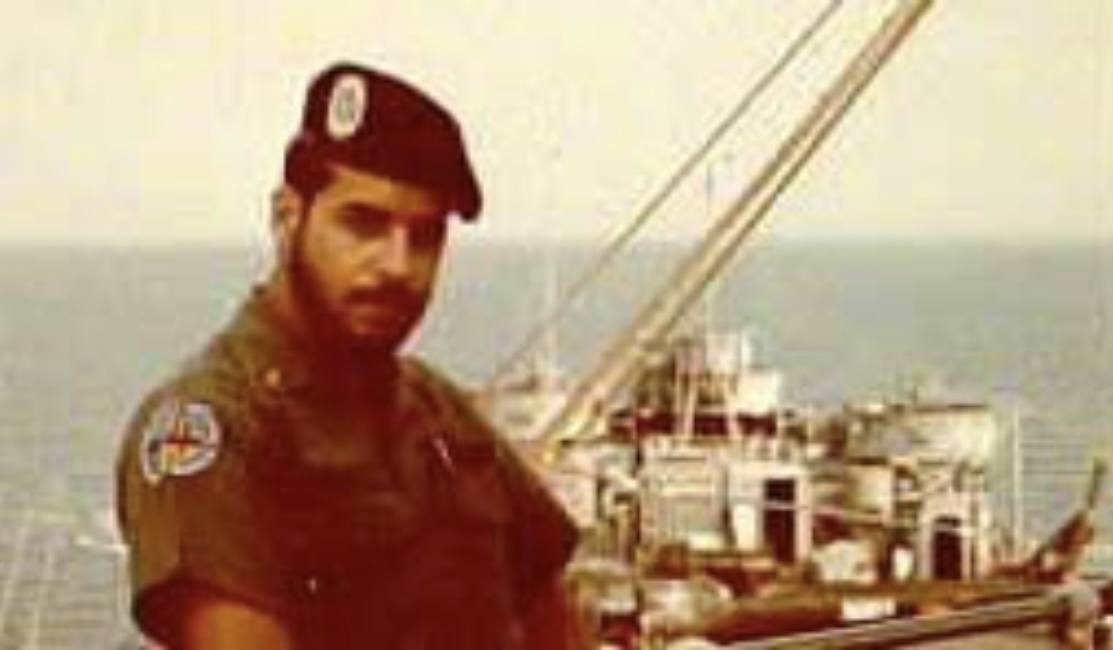
Rabbi Arnold E. Resnicoff, matriculated with the Class of 1968 but graduated with Class of 1969
My time in Vietnam spanned one year, directly after graduation, but it was followed by years working to create and support the Vietnam Veterans Memorial (“The Wall”), to improve the way veterans were remembered, respected, and cared for: indeed, to change the vision of America when it came to military personnel involved with sometimes unpopular wars.
My father immigrated to America when he was 3 years old, when his father – my grandfather – fled Russia to seek safety and freedom in the US. My grandfather, a well-known rabbi in Russia, established a synagogue in Brooklyn. My father was raised to be a proud American, grateful for the freedoms we were granted here. My father told me that my grandfather ended his sermons both thanking God for making it to America – and thanking Him that there was an America, period.
My father quit his job the day after the Pearl Harbor attack and served in the Navy until the end of WWII. As the oldest of his three boys, my father instilled in me the feeling that I should serve for at least one assignment in the military, as well, as a continuing family effort to “pay our dues.”
Because of that upbringing, I joined a local Naval Reserves submarine unit while still in High School and then switched to NROTC at Dartmouth.
Following graduation, I was assigned to the USS Hunterdon County (LST-838), one of four WWII tank landing ships taken out of mothballs and reconfigured for riverine warfare in Vietnam: the largest ships in our “Brown Water Navy,” part of “Operation Game Warden,” the operation to keep the rivers clear of Vietnam infiltrators.
We had two Seawolf helicopters on our reinforced deck, and within the ship, in place of the tanks that were carried during WWII, we had shops to repair the “small boats” – the PBRs and PCFs that patrolled the rivers. Made of fiberglass and jet-propelled, these boats needed barely 6” of water, while we needed approximately 11 feet. That meant that during the dry season we would go as far as we could and then weigh the anchor to remain as a site for boats and helos to refuel and rearm. During the rainy season, we could continue to the border between Vietnam and Cambodia – and on May 12, 1970, I was Junior Officer of the Deck as we crossed that border, becoming the Navy’s first commissioned vessel to sail in the rivers of Cambodia after President Nixon gave the order. Before then, Viet Cong units would cross into Vietnam’s rivers and then return to Cambodian waters with what they thought was impunity.
I have many memories of that year in Vietnam, including the way we would use a rifle to shoot at every branch we saw floating in the water, afraid that it might be camouflage for a Viet Cong fighter attempting to plant explosives.
After the war, Jan Scruggs, the Army enlisted man who had a vision to create a memorial “to heal the nation” – to heal the wounds created by the war – enlisted me into the small group of veterans who would fight to see the memorial built. It was not easy. There were many on the right that only wanted a memorial that would glorify the war, putting an end to criticism; there were many on the left who would support a memorial only if the protestors were lauded at the same level as the warfighters.
Instead, we built a Wall that made no statement about the war: a memorial that listed the names of the dead, creating a safe space – a sacred space for many of us – to mourn, and to remember. We mourned the dead, along with the pain of the survivors.
Before that Wall, those who hated the war transferred that hatred to the war’s fighters and the war’s veterans. We changed that vision, so that Americans could still oppose a war, while supporting and comforting those who were sent to fight. We saw that change during our next military operations, Desert Shield and Desert Storm, when many Americans, including those who opposed those operations, took their cue from an old country song, and tied yellow ribbons around their “old oak trees,” symbolizing their prayers for a safe return.
I had the honor of delivering the closing prayer at the 1982 dedication of the Wall, as well as many other ceremonies that took place there. One newspaper gave me the supreme honor of referring to me as “The Wall’s Rabbi” for my years of support.
This year, 2026, I was honored once more, as one of the inaugural recipients of the Vietnam Veterans Memorial Service Beyond Service Award, recognizing veterans who continued to serve our nation and its communities after returning home from the war.
I am thankful that my name is not on the Wall, along with those thousands and thousands and thousands of men and women who died. But I am grateful that my name and history is now on the Memorial’s website, symbolizing the success of our efforts to remind our nation to be a grateful nation regarding those who served, regardless of feelings about the war we were sent to fight.